Tag: Building a custom home in Texas

  • How to Choose a Home Builder in Texas

    How to Choose a Home Builder in Texas

    Choosing the right builder is one of the most important decisions you’ll make when planning a new home. If you’re researching how to choose a home builder in Texas, don’t base your decision on the advertised price or a few impressive project photos. You need to understand how each builder works, which responsibilities they take on, how they manage costs, and whether their approach matches your expectations.

    A home building project involves many connected decisions, from design and materials to scheduling, approvals, and construction. Your builder will coordinate many of these activities, so their approach can influence the entire project. Take time to compare your options before signing an agreement to reduce the risk of misunderstandings later.

    How to Choose a Home Builder in Texas: Start With Your Project Needs

    Before comparing builders, get clear about the home you want to build. A builder who suits a straightforward residential project may not be the right fit for a customized home with specific design, structural, or site requirements.

    Start by outlining:

    • Type of home: Are you planning a custom home, a more conventional new build, a duplex, or another residential project?
    • Size and layout: Have you decided on the approximate size, number of rooms, and main features?
    • Design expectations: Do you already have architectural plans, or will you need design support?
    • Property status: Do you own the land, or are you still evaluating potential sites?
    • Budget: What is your expected construction budget, and which features matter most?
    • Project responsibilities: Do you want one team to coordinate several stages, or will you arrange separate professionals?

    These details give you a clearer basis for comparing proposals. They also help builders understand what you expect them to deliver.

    If you are still working through the early planning stages, the broader How to Start a Construction Project: Step-by-Step Guide explains how project scope, budgeting, design, approvals, and professional selection fit together.

    1. Look for Relevant Home-Building Experience

    A builder’s experience should match the home you want to build. A long list of completed projects means little if those projects differ significantly from yours.

    For example, if you’re planning a custom home with a particular layout, architectural style, or set of structural requirements, ask whether the builder has handled comparable work.

    When reviewing experience, consider:

    • The types of residential projects the builder has worked on.
    • Whether they have experience with homes of a similar size and complexity.
    • Whether their work includes the level of customization you expect.
    • How they approach design coordination and construction planning.
    • Whether they can explain the challenges involved in projects similar to yours.

    Ask to see relevant examples and request details about the builder’s role in each project. Find out whether they managed the full construction process or handled only certain stages.

    You can also read What Does a Custom Home Builder Actually Do? to understand the responsibilities a custom home builder may take on during planning, design coordination, budgeting, and construction.

    The goal is not to find a builder who claims to do everything. It is to find one whose actual experience and responsibilities match your project’s requirements.

    2. Understand What the Builder Will Handle

    Two builders may offer similar-looking proposals while taking on very different responsibilities. One may handle design coordination, budgeting, scheduling, and construction management. Another may provide only a narrower construction service.

    Before making a decision, ask the builder to explain exactly what the proposal includes.

    Depending on the agreement and project structure, responsibilities may involve:

    • Reviewing the project scope and initial requirements.
    • Coordinating design and engineering inputs.
    • Preparing or reviewing construction estimates.
    • Planning the work and construction schedule.
    • Coordinating subcontractors, suppliers, and site activities.
    • Monitoring work against the agreed scope.
    • Communicating progress and decisions.
    • Managing approved changes during construction.

    Do not assume that every builder provides all these services. Ask who will handle each responsibility and whether the proposal includes it or prices it separately.

    This is especially important when several professionals are involved. You should know who will coordinate their work and whom you should contact when a decision or issue needs attention.

    For a more detailed look at the steps involved in a custom build, see How to Build a Custom Home: A Step-by-Step Guide.

    3. Review the Builder’s Process and Communication

    A builder’s process tells you a lot about what working with them may look like. Before hiring anyone, understand how they move from an initial discussion to construction and how they keep homeowners informed along the way.

    Ask the builder to walk you through the main stages of your project.

    You should understand:

    • What information they need before preparing a proposal.
    • How they will review the design and project scope.
    • When they will discuss the budget and major material selections.
    • How they will develop the construction schedule.
    • Who will serve as your main point of contact.
    • How often they will provide progress updates.
    • How they will communicate questions, delays, and unexpected issues.

    Pay attention to how the builder responds during your early conversations. Do they listen carefully to your requirements? Do they explain unfamiliar terms? Are they clear about what they can confirm and what still needs investigation?

    A useful conversation should leave you with a better understanding of the project, not more uncertainty.

    Ask How the Builder Will Handle Changes

    Changes can arise when a homeowner adjusts the design, selects different materials, or requests additional work. Before signing, understand how the builder records and manages these changes.

    Ask whether the builder will explain each change in writing, including its effect on cost or schedule, before proceeding with the work.

    A clear process helps both sides understand what they have approved and what the revised agreement includes.

    4. Compare Estimates, Budgets, and What’s Included

    Items homeowners should compare when reviewing home builder construction estimates.

    The lowest estimate is not automatically the best choice. Two builders may quote different prices because their proposals cover different materials, services, allowances, or project responsibilities.

    When you compare proposals, look beyond the final number.

    A useful estimate should help you understand:

    • The work included in the proposed scope.
    • Materials, finishes, and specifications covered by the price.
    • Items the builder excludes or prices separately.
    • Allowances for selections you have not finalized.
    • Design, engineering, and other professional fees, where applicable.
    • Site preparation and other property-specific work, where applicable.
    • The expected payment structure.
    • How the builder will price additional work and changes.

    If one proposal is significantly lower than another, ask the builder to explain the difference. The builder may have excluded work that another proposal covers, or they may have used different material specifications.

    Avoid comparing proposals until you understand whether they cover the same scope.

    Check How the Builder Will Manage the Budget

    Your initial estimate is only useful if you understand how the builder will manage costs as the project develops.

    Ask:

    1. Who will track project costs?
    2. How will the builder tell you when an expense changes?
    3. Who approves material upgrades or substitutions?
    4. What happens if site conditions require additional work?
    5. How will changes to the original scope affect the budget?

    If you want to understand the wider cost factors involved in a custom home, read Custom Home Construction Cost: What Should You Budget For?

    That resource is particularly useful when you are deciding whether a builder’s estimate reflects the full project or only part of the work.

    5. Read the Contract Before You Commit
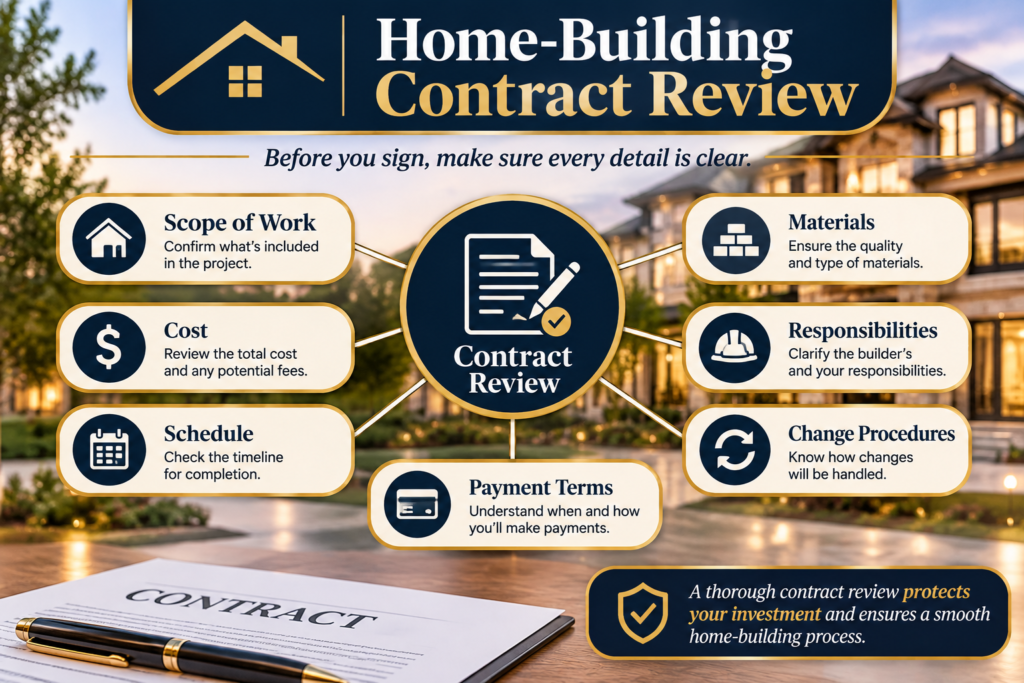
    Important details to review in a Texas residential construction contract.

    A verbal discussion or attractive proposal is not a substitute for a clear written agreement. Before hiring a builder, read the contract carefully and make sure it reflects what you have discussed.

    For a residential construction project in Texas, this is an important step. Section 53.255 of the Texas Property Code requires an original contractor to provide the owner with a residential construction contract disclosure statement before the contract is executed. The statutory disclosure advises homeowners to investigate the contractor and get the agreement in writing.

    You can review the provision in the Texas Property Code, Section 53.255.

    Understand the Texas Contract Disclosure

    Take time to review the disclosure statement and understand the information it provides. It gives homeowners guidance on investigating a contractor and documenting the agreement before construction begins.

    Do not treat the disclosure as a replacement for reviewing the actual contract. You should still check the project’s scope, costs, responsibilities, and other agreed terms.

    Check What Your Home-Building Contract Includes

    As you review the agreement, check whether it clearly explains:

    • Scope of work: What exactly will the builder complete?
    • Project cost: What is the agreed price, or how will the builder determine the final cost?
    • Schedule: What are the estimated or required start and completion dates?
    • Payment terms: When must you make payments, and what conditions apply to each payment?
    • Materials and specifications: Which materials, finishes, and products does the price include?
    • Changes: How will both sides document and price changes to the original scope?
    • Responsibilities: What will the builder handle, and what remains your responsibility?
    • Final completion: What must the builder complete before you consider the project finished?

    Make sure the builder includes every important promise from your meetings or calls in the written agreement.

    Clarify Uncertain Terms Before Signing

    If something is unclear, ask the builder to explain it before you sign. Do not rely on verbal assurances when the written agreement says something different.

    For additional consumer guidance on written bids, references, and contractor agreements, the Texas Attorney General’s guide to avoiding home improvement scams is also worth reviewing. Although it focuses on home improvement work, its advice about checking references, comparing written bids, and reviewing contracts is useful when assessing a contractor.

    If the contract includes unfamiliar legal terms or creates obligations you do not understand, consider having a qualified attorney review it before you commit.

    6. Check References and Look for Warning Signs

    A builder’s portfolio shows examples of their work, but conversations with previous clients can tell you more about the working relationship.

    Ask the builder for references from homeowners whose projects are comparable to yours. If possible, speak with more than one client.

    Useful questions include:

    • Was the builder clear about the original scope and budget?
    • Did the builder answer questions consistently and in a reasonable way?
    • Did the builder explain changes before proceeding?
    • How did the builder handle unexpected issues?
    • Did the builder provide progress updates as expected?
    • Did the builder complete the work according to the agreed plans and specifications?
    • Is there anything the homeowner would approach differently if starting again?

    You can also ask whether you can visit a completed project or, with permission, view work in progress.

    Watch for These Warning Signs

    Take extra care if a builder:

    • Pressures you to sign before you have reviewed the agreement.
    • Avoids providing a written estimate or clear scope of work.
    • Cannot explain what the quoted price includes.
    • Gives vague answers about who will manage the project.
    • Makes promises that do not appear in the written proposal.
    • Refuses to explain how changes will affect cost or timing.
    • Offers a price that is unusually low without explaining why.
    • Is unwilling to provide relevant references.

    One warning sign does not automatically mean a builder is unsuitable. However, repeated evasive answers or pressure to commit should make you pause and investigate further.

    If you are still comparing potential builders, How to Find Custom Home Builder options for Your Project covers the earlier research and shortlisting stage. Use it alongside this guide when you want to review your options before making a final selection.

    7. Consider Texas and Houston Project Requirements

    Choosing a home builder in Texas also means considering where you plan to build. Each city, county, and property can have different requirements and site conditions.

    A builder should be prepared to discuss the local considerations that may affect your project. You should also understand which authority has jurisdiction over the property.

    For a Houston-area home, for example, confirm whether the property falls within the City of Houston or another local jurisdiction. Permits, inspections, drainage reviews, and other requirements may differ depending on the location and scope of work.

    You should also discuss property-specific considerations such as:

    • Soil conditions and foundation design.
    • Drainage and flood exposure.
    • Site access and preparation.
    • Utility availability and connections.
    • Local permits and required approvals.
    • Design choices that respond to the property’s conditions.

    Do not assume that a builder’s experience in one Texas city automatically means every local requirement will be the same elsewhere.

    For more detail on these location-specific considerations, read How to Build a House in Texas: What to Know Before You Start.

    The right builder should be willing to explain which issues need checking, which professionals may need to get involved, and what you must confirm before construction begins.

    A Final Checklist Before Choosing Your Builder
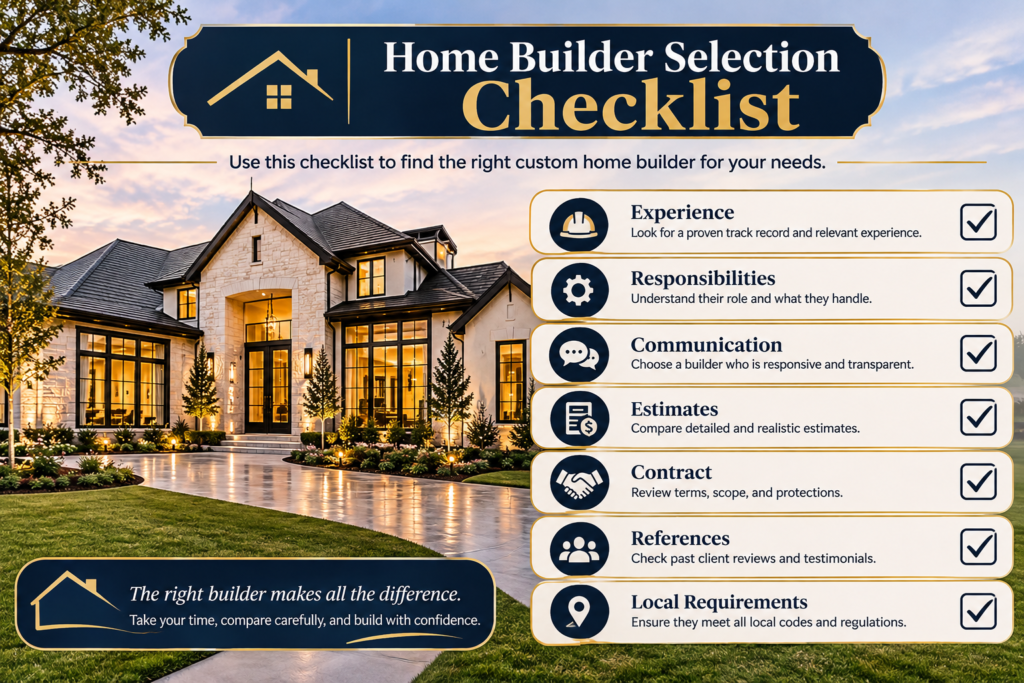
    Checklist of factors to consider when choosing a home builder in Texas.

    Before making your final decision, use this checklist to compare your options.

    What to checkQuestions to answer
    Relevant experienceHas the builder handled projects similar to yours?
    Project responsibilitiesDo you understand what the builder will and will not handle?
    ProcessCan the builder explain the major stages of the project?
    CommunicationDo you know who your main contact will be and how updates will work?
    EstimateIs the scope clear, with exclusions and allowances identified?
    Budget managementDo you understand how the builder will handle costs and changes?
    ContractDoes the written agreement reflect your discussions and agreed terms?
    ReferencesHave you spoken with previous clients or reviewed relevant completed work?
    Local requirementsHave you discussed the relevant property and jurisdiction-specific considerations?
    Overall fitDoes the builder understand your priorities and communicate clearly?

    When deciding how to choose a home builder in Texas, look at the complete picture. A suitable builder should explain their responsibilities, provide a clear basis for the proposed cost, discuss the project process, and put important agreements in writing.

    Do not rush the decision because one estimate looks attractive or a builder promises an especially quick start. Take the time to compare the details and make sure you understand what you are agreeing to.

    Frequently Asked Questions

    How do I know if a home builder is reliable?

    Look at relevant project experience, written estimates, references, communication, and the clarity of the proposed contract. Ask previous clients about their experience and pay attention to how the builder responds to your questions before you hire them.

    Should I choose the home builder with the lowest estimate?

    Not necessarily. A lower estimate may exclude materials, services, site work, or other costs that a competing proposal includes. Compare the scope, specifications, exclusions, allowances, and payment terms before deciding which estimate offers the better fit.

    What should be included in a home-building contract in Texas?

    The agreement should clearly explain the work the builder will perform, the cost or how the builder will determine it, the project schedule, and payment terms. It should also address specifications, responsibilities, and how both sides will handle changes. Texas Property Code Section 53.255 sets out a required residential construction contract disclosure statement and advises owners to obtain a written agreement.

    How many builders should I compare before making a decision?

    There is no fixed number that works for every project. Comparing multiple qualified builders can help you understand differences in scope, pricing, process, and responsibilities. Focus on the quality and completeness of the proposals rather than collecting estimates without comparing their details.

    Who is the best custom home builder in Houston?

    There is no single builder who is automatically the best choice for every homeowner. The right option depends on your project requirements, budget, design expectations, and preferred working relationship. Compare relevant experience, project responsibilities, written proposals, communication, and references before making a decision.

    When should I contact a home builder?

    You can contact builders once you have a general idea of your project, budget, and property situation. You do not need to have every design detail finalized, but clear priorities will make early discussions and proposals more useful.

    Ready to Discuss Your Home-Building Project?

    Choosing a builder is easier when you understand what your project needs and what to expect from the team responsible for carrying it out.

    Venus Builders provides residential construction services for new homes and custom-home projects in Texas. If you’re exploring your options, take a look at Venus Builders’ residential construction services to learn more about the work involved.

    Have a home-building project in mind? Schedule a consultation with Venus Builders to discuss your requirements, plans, and next steps.
  • What Does a Custom Home Builder Actually Do?

    What Does a Custom Home Builder Actually Do?

    A custom home builder manages the work involved in turning a home’s design and construction plans into a finished house. Depending on the agreement, this can include reviewing the project scope, coordinating architects and engineers, preparing construction estimates, managing subcontractors, monitoring progress, and organizing the work through completion.

    However, hiring a builder does not automatically mean every part of the project is included. Some builders offer design-build services, while others take responsibility for construction after the homeowner has worked with an architect. The contract determines who handles each task, which services are included, and what remains the homeowner’s responsibility.

    Understanding the role of a custom home builder can help you ask better questions, compare proposals, and know what to expect before construction begins.

    What Does a Custom Home Builder Do?

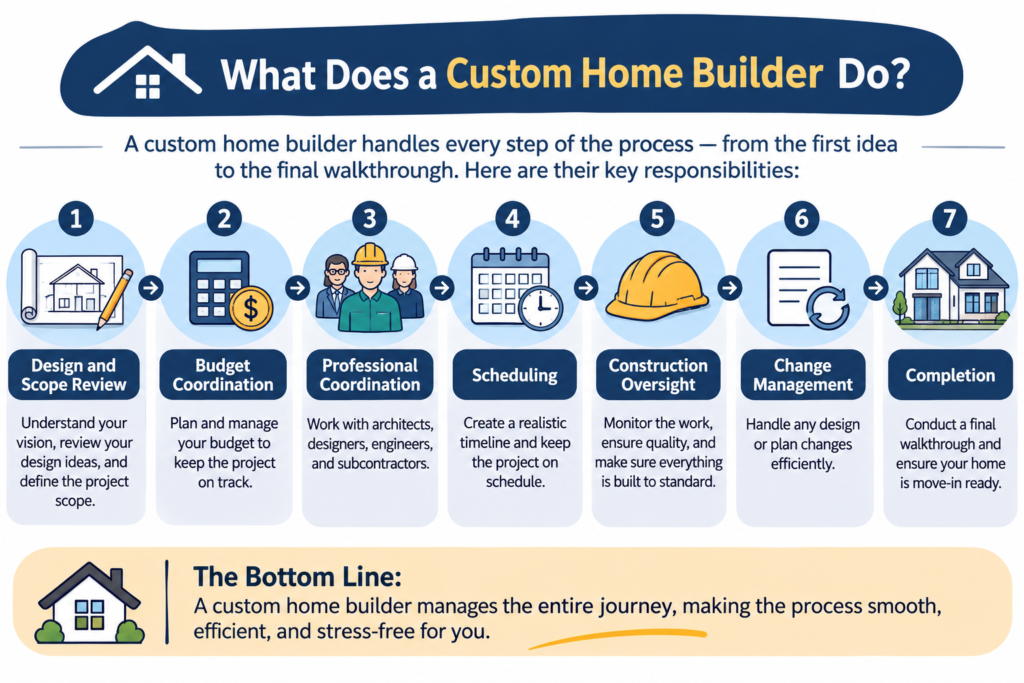
    Main responsibilities of a custom home builder, from project planning and budgeting to construction oversight and completion.

    A custom home builder coordinates and manages the construction of a home based on the owner’s requirements, the approved design, the property, and the agreed project scope.

    Unlike a project built from a standard plan with limited choices, a custom home may involve individual design decisions, specific material selections, layout changes, and property-related considerations. Someone needs to bring the different parts of that work together.

    A builder’s responsibilities commonly include:

    • Reviewing the home design, construction plans, and project scope.
    • Preparing or coordinating construction estimates.
    • Working with architects, engineers, subcontractors, and suppliers.
    • Organizing construction activities and material deliveries.
    • Developing and monitoring the construction schedule.
    • Coordinating site work and monitoring construction progress.
    • Communicating about changes, costs, and delays.
    • Arranging required inspections and preparing for project completion.

    The exact role depends on the services the builder has agreed to provide. Before signing, homeowners should understand which responsibilities are included and which require separate professionals.

    What Are the Main Responsibilities of a Custom Home Builder?

    The work of a custom home builder extends beyond the physical construction of the house. Much of the responsibility involves planning, coordination, cost management, communication, and keeping different trades working in the right sequence.

    1. Reviewing the Home Design and Project Scope

    Before construction starts, the builder needs to understand what the project involves.

    This means reviewing the available plans, discussing the homeowner’s requirements, identifying the work included in the agreement, and clarifying details that could affect cost, materials, or scheduling.

    The builder may also coordinate with the architect and engineers to understand structural requirements, building systems, material specifications, and site conditions. If a design decision creates a construction or budget concern, the builder can raise it with the relevant professionals and discuss possible adjustments with the homeowner.

    A clear scope of work is important because it establishes what the finished home is expected to include. It also helps prevent misunderstandings about excluded items, additional work, and responsibilities.

    2. Preparing and Managing the Construction Budget

    Budget coordination is another important part of a builder’s role.

    Depending on the agreement, the builder may prepare an estimate or coordinate pricing for labor, materials, subcontractors, and other construction work. The estimate should explain what is included, what is excluded, and which costs may change as the project develops.

    A residential construction budget may account for:

    • Site preparation and foundation work.
    • Structural construction, framing, and roofing.
    • Plumbing, electrical, and HVAC systems.
    • Interior finishes, fixtures, and materials.
    • Subcontractor labor.
    • Applicable permits, inspections, and project fees.
    • Other agreed work, such as driveways or landscaping.

    Homeowners should not assume that every project-related expense is included in the builder’s estimate. Land, design and engineering fees, financing costs, utility connections, landscaping, and other items may be handled separately depending on the project.

    The builder should also explain how the budget will be updated when the scope changes. For example, upgrading flooring, changing fixtures, or revising a room layout may affect material costs, labor, and the construction schedule.

    For a broader look at the early decisions involved in organizing a project, read theHow to Start a Construction Project: Step-by-Step Guide.

    3. Coordinating Architects, Engineers, Subcontractors, and Suppliers

    A custom home requires input from several professionals and construction trades. The builder helps coordinate their work so that each stage can proceed when the preceding work is ready.

    Depending on the project, this may involve working with:

    • Architects and designers: Develop the home’s design, layouts, and architectural plans.
    • Engineers: Address structural and other technical requirements.
    • Electricians and plumbers: Install the home’s electrical and plumbing systems.
    • HVAC contractors: Handle heating, ventilation, and air-conditioning work.
    • Other subcontractors: Complete framing, roofing, insulation, drywall, flooring, painting, and other construction tasks.
    • Suppliers: Provide materials, fixtures, and equipment required for the project.

    For example, electrical and plumbing work needs to align with the home’s layout and construction sequence. Material deliveries also need to arrive when the relevant work is ready.

    The builder’s responsibility is to coordinate the people and activities covered by the agreement. Homeowners should confirm who hires subcontractors, manages supplier arrangements, and communicates with each professional.

    4. Creating and Managing the Construction Schedule

    A custom home builder typically develops or coordinates a construction schedule and monitors progress against it.

    The schedule may cover site preparation, foundation work, framing, roofing, plumbing and electrical installations, interior finishes, inspections, and final completion.

    Each stage depends on several factors, including the design, property conditions, approvals, material availability, labor, and completion of earlier work. A delay in one area can affect activities scheduled afterward.

    The builder should communicate important milestones and explain when a delay affects the wider project. Weather, material availability, design changes, inspection findings, and unfinished preceding work may all affect the sequence.

    A schedule is a planning tool, not a guarantee that every stage will finish on an exact date. Homeowners should understand how updates will be shared and how changes to the schedule will be handled.

    5. Overseeing Construction and Monitoring Workmanship

    During construction, the builder coordinates site activities and monitors whether work is progressing according to the plans, specifications, and agreement.

    This may involve:

    • Coordinating subcontractors and construction activities.
    • Checking progress against the agreed scope.
    • Identifying issues that need attention.
    • Communicating site-related decisions to the homeowner.
    • Coordinating required inspections.
    • Following up on work that needs correction.

    The precise quality-control responsibilities should be explained in the agreement. Homeowners should also understand how to raise concerns, who will respond, and how corrective work will be documented.

    A builder’s site oversight does not necessarily replace the role of an independent inspector or other professional. If independent inspections are important to the homeowner, that arrangement should be discussed separately.

    6. Managing Changes and Unexpected Issues

    Changes can arise during a custom home project. A homeowner may want to revise a design detail, a selected material may become unavailable, or a site condition may require further attention.

    The builder helps assess how an issue affects the construction work and coordinates with the relevant professionals when a decision is needed.

    Before approving a change, the homeowner should understand:

    • What is changing and why.
    • Whether revised plans or additional approvals are needed.
    • How much the additional work will cost.
    • Whether the change affects the schedule.
    • How the revised scope and price will be documented.

    A written change order or another agreed written approval process helps both parties keep track of additional work and its cost implications.

    Homeowners should avoid relying on informal conversations alone when a change affects the contract, budget, or construction schedule.

    7. Coordinating Inspections and Preparing for Completion

    Some construction stages require inspections or approvals under the applicable local requirements. Depending on the agreement and project arrangements, the builder may coordinate access, prepare work for inspection, respond to identified issues, and organize the next stage.

    As the home approaches completion, the builder may also coordinate remaining construction work and prepare for handover.

    Before considering the project complete, clarify:

    • Which inspections or approvals are required.
    • What documents or records will be provided.
    • How outstanding items will be listed and addressed.
    • What warranty information, if any, is included in the agreement.
    • Whether maintenance guidance or other handover information will be supplied.

    The homeowner should know what completion means under the contract rather than assuming that the final construction activity automatically settles every outstanding responsibility.

    What Does a Custom Home Builder Not Usually Do?

    A custom home builder may coordinate several parts of a project, but that does not mean every professional service or project expense is automatically included.

    Some responsibilities are commonly handled separately:

    • Buying the land: The homeowner typically chooses and purchases the property unless a separate arrangement has been made.
    • Architectural design: Some builders offer design-build services. Others work with an architect hired separately by the homeowner.
    • Engineering: Structural and other engineering services may be provided by separate professionals.
    • Financing: Mortgage applications, construction loans, and other financing arrangements are generally separate from the builder’s construction responsibilities.
    • Legal and property matters: Title, easements, deed restrictions, and legal advice may require a real estate or legal professional.
    • Independent inspections: Homeowners may choose to hire independent inspectors in addition to inspections required by the relevant authorities.
    • Work outside the contract: Landscaping, fencing, appliances, utility connections, or other items may be excluded unless they are specifically included in the agreement.

    These are not universal exclusions. A builder may take responsibility for some of these services through a wider agreement or by coordinating separate professionals. The important point is to confirm what is included rather than assume.

    How Is a Custom Home Builder Different From an Architect, Engineer, or Project Manager?

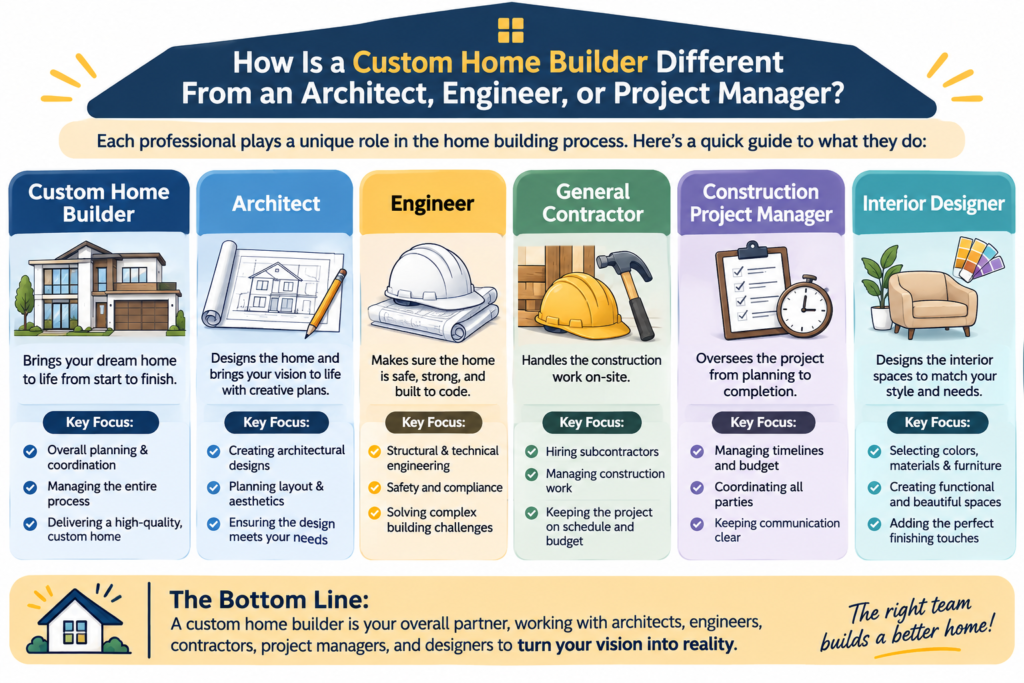
    Comparison of the responsibilities of a custom home builder, architect, engineer, general contractor, and construction project manager.

    These professionals may work together on the same home, but their roles are different. One company or professional may also take on more than one role, depending on the project arrangement.

    ProfessionalMain responsibility
    Custom home builderCoordinates and carries out the agreed home construction work, including site activities, subcontractors, scheduling, and construction coordination as defined in the agreement.
    ArchitectDevelops the architectural design and plans. The architect’s additional services may include design coordination or construction-phase observations.
    EngineerProvides technical design and analysis for specific areas, such as structural components or other building systems.
    General contractorManages construction work under a contract. A custom home builder may perform this role on a residential project.
    Construction project managerCoordinates planning, budget, schedule, communication, and project delivery according to the scope of their appointment.

    The distinction matters because homeowners need to know who is accountable for each part of the work. Before construction begins, confirm who handles design, engineering, permitting, subcontractor coordination, site oversight, communication, and handover.

    For a closer look at how planning, scheduling, budget coordination, and communication fit together across a project, see the construction project management service.

    When Should You Hire a Custom Home Builder?

    The right time to involve a builder depends on the project and the services you need.

    If you are still exploring a property, design, or budget, speaking with a builder early may help you understand construction considerations before making major commitments. Some builders can contribute during pre-construction, while others prefer to begin after the homeowner has completed the design and plans.

    Consider speaking with a builder when:

    • You own land or are considering purchasing a property for a new home.
    • You want to understand how your design may affect construction costs.
    • You need to discuss the practical requirements of building your proposed home.
    • You want to understand how subcontractors, materials, and site activities will be coordinated.
    • You are preparing to compare construction proposals.
    • You want to clarify responsibilities before signing an agreement.

    If you are still working through the overall homebuilding journey, How to Build a Custom Home: A Step-by-Step Guide explains the broader process from planning and design through construction and completion.

    For Texas specific preparation, including considerations that may affect a residential project in the state, see How to Build a House in Texas: What to Know Before You Start

    These guides cover the wider building process and regional preparation. This article focuses specifically on the builder’s responsibilities within that process.

    What Should You Ask a Custom Home Builder Before Hiring One?

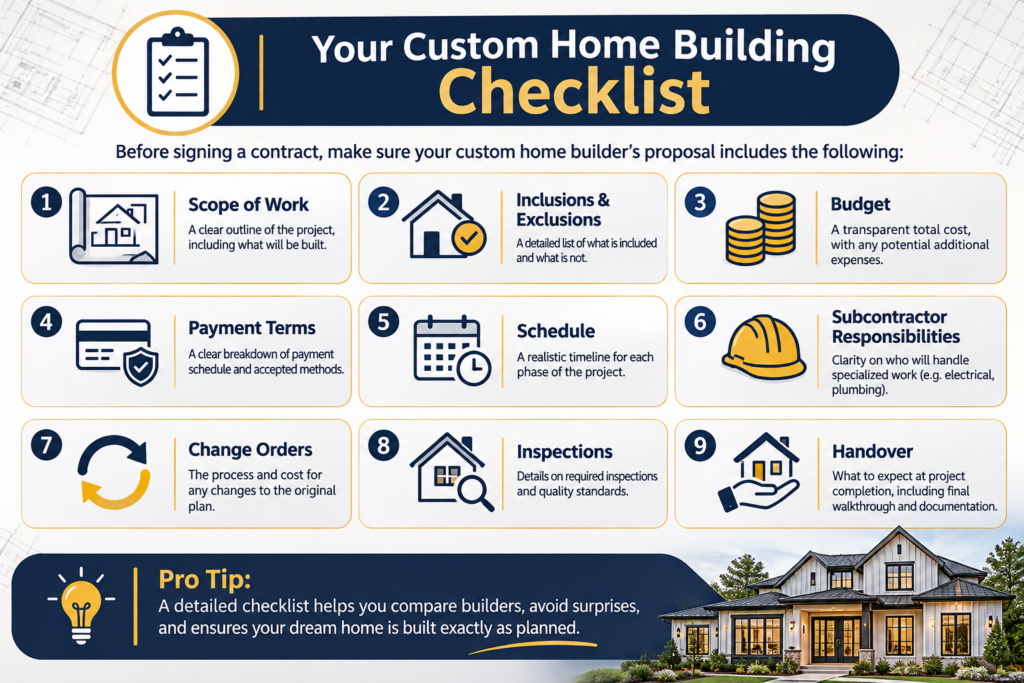
    Checklist of responsibilities and contract details to review before hiring a custom home builder.

    Before signing an agreement, ask questions that help you understand what the builder will manage, how the work will be organized, and how decisions will be handled.

    Useful questions include:

    1. What services are included in the agreement? Ask for a clear description of the builder’s responsibilities and any excluded work.
    2. Will you coordinate with the architect and engineers? Confirm who communicates with the design and technical professionals.
    3. How will the construction estimate be prepared and updated? Ask what the estimate includes and how changes in pricing will be handled.
    4. How are allowances, upgrades, and changes priced? Understand the approval process before additional work begins.
    5. Who hires and coordinates subcontractors? Clarify who manages trade contractors and material deliveries.
    6. How will I receive progress updates? Agree on how often updates will be provided and who your main contact will be.
    7. What is the proposed construction schedule? Ask which milestones are included and what conditions could affect the schedule.
    8. Who coordinates required inspections? Confirm who prepares the work, arranges access, and follows up on inspection findings.
    9. How are construction concerns and corrective work handled? Understand how issues are reported and resolved.
    10. What documents will I receive at handover? Ask about completion records, outstanding items, and any warranty or maintenance information included in the agreement.

    Ask for important responsibilities and arrangements to be documented. Clear written terms make it easier to understand what each party has agreed to do.

    How Do You Know If a Custom Home Builder Is Right for Your Project?

    A suitable builder should be able to explain the proposed scope, the construction process, the responsibilities of the project team, and how costs and changes will be managed.

    When comparing builders, look beyond the initial estimate. Consider:

    • Whether the proposed work matches your project requirements.
    • Whether the written scope clearly explains inclusions and exclusions.
    • Whether the estimate is understandable and sufficiently detailed.
    • How the builder communicates about costs, progress, and decisions.
    • How subcontractors and materials will be coordinated.
    • Whether the proposed schedule explains important milestones and dependencies.
    • Whether the agreement explains how changes and problems will be handled.
    • Whether references and relevant experience can be reviewed.

    The right arrangement depends on the support you need. If you expect one team to coordinate design, budgeting, approvals, construction, and handover, make sure those responsibilities are explicitly covered. Do not assume that a service is included simply because it is related to building a home.

    Frequently Asked Questions

    What is the main job of a custom home builder?

    A custom home builder coordinates the construction of a home according to the agreed design, scope, budget, and schedule. The work may include managing subcontractors, organizing materials, monitoring progress, communicating changes, and coordinating inspections and handover.

    Does a custom home builder help with design?

    Some custom home builders offer design-build services or coordinate with architects and designers. Others begin construction after the homeowner has completed the design with separate professionals. Ask which design-related services are included before signing an agreement.

    Does a custom home builder handle permits?

    A builder may coordinate permit applications and required inspections, but responsibilities vary by project and local requirements. Confirm who prepares documents, submits applications, pays applicable fees, and arranges inspections.

    Is a custom home builder the same as a general contractor?

    The roles can overlap. A custom home builder may act as the general contractor on a residential project, managing subcontractors and construction activities. The exact responsibilities depend on the agreement.

    Does the builder manage the entire construction budget?

    Not necessarily. A builder may prepare or coordinate estimates for the agreed construction work and communicate changes that affect costs. Homeowners should confirm which expenses are included, which are separate, and how additional work is approved.

    Can I hire a custom home builder before I have finished the house plans?

    That depends on the builder’s services. Some builders can contribute during early planning or work through a design-build arrangement. Others require completed plans before preparing a construction proposal.

    What should be included in a custom home builder’s contract?

    The agreement should clearly describe the scope of work, responsibilities, pricing or payment arrangements, exclusions, schedule information, procedures for changes, and how completion and outstanding work will be handled. The details will vary by project.

    Discuss Your Custom Home Project With Venus Builders

    A custom home builder does more than arrange construction activities. The role can involve coordinating professionals, managing subcontractors, organizing schedules, monitoring progress, and helping homeowners understand decisions that affect the work.

    Before hiring a builder, make sure you understand the scope of the agreement, which services are included, how changes will be handled, and who is responsible for each stage.

    Venus Builders provides residential construction services for custom-home and new-home projects. If you are exploring a project in Texas, visit the Venus Builders Residential Construction page to learn more about the service and discuss the next steps for your home.

  • How to Start a Construction Project: Step-by-Step Guide

    How to Start a Construction Project: Step-by-Step Guide

    Starting a construction project can feel like a lot at once. You may know what you want to build, remodel, or change, but not know what should happen first.

    The best place to start is by defining the project, understanding what type of construction work you need, checking the property and site, setting a realistic budget, planning the design, and then choosing the right professionals to take the project forward.

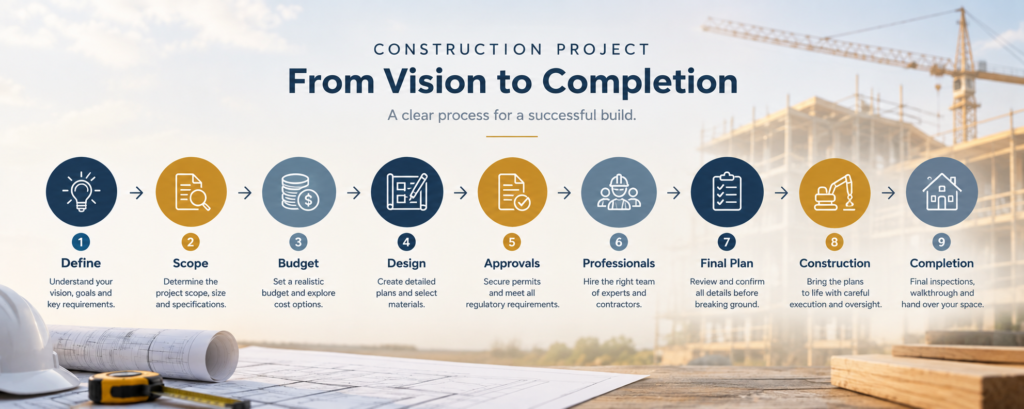
    This guide walks through the main construction project steps, from the first idea through planning, construction, and completion.

     Construction project steps from planning through completion

    What should you do first when starting a construction project?

    Start by clearly defining what you want to build or change and why.

    Before contacting a contractor or discussing construction costs, you should have a basic understanding of:

    • What you want to build, remodel, or renovate
    • Where the project will take place
    • Whether it is residential or commercial construction
    • What you want the finished space to achieve
    • Any major requirements or features you already have in mind
    • Your general budget expectations
    • When you would ideally like the project completed

    You do not need every detail figured out at this stage. The goal is to turn a general idea into a project that can be properly planned.

    From there, you can work through the main stages of construction project planning.

    Step 1: Decide what you want to build or change

    The first question is simple: what exactly are you trying to accomplish?

    You might be:

    • Building a new custom home
    • Building on land you already own
    • Constructing a commercial property
    • Completing a commercial build-out
    • Remodeling an existing home
    • Renovating a commercial space
    • Redesigning an interior
    • Changing the layout or use of an existing space

    The more clearly you can describe the project, the easier it becomes to determine what professionals, designs, approvals, budget, and timeline you may need.

    For example, someone planning a new custom home will have a very different process from someone renovating a kitchen or completing a commercial tenant improvement.

    If you are considering a new custom home, our guide on how to build a custom home goes deeper into that process.

    Step 2: Identify the type of construction project

    Once you know what you want to accomplish, identify the type of project you are actually planning.

    New residential construction

    This includes projects such as custom homes and other new residential structures.

    If you are building a new home, the process can involve land evaluation, architectural design, engineering, budgeting, permitting, construction, and final completion.

    See our guide to how to build a house in Texas for a closer look at the residential construction process in Texas.

    Commercial construction

    Commercial construction can include new commercial buildings, tenant improvements, build-outs, and other commercial projects.

    The requirements can vary significantly depending on the property, intended use, site, design, and local requirements.

    Our guide to commercial construction in Houston explains what the commercial construction process can look like from planning through completion.

    Remodeling and renovation

    If you already own or occupy a property, you may not need new construction. Remodeling or renovation may be the better fit.

    This could involve:

    • Kitchen remodeling
    • Bathroom remodeling
    • Whole-home renovation
    • Commercial renovation
    • Layout changes
    • Interior upgrades

    If you are planning a residential project, see our guide on home remodeling in Houston to understand where the process begins.

    Interior design

    Some projects need more than construction alone. Interior planning can affect how a space functions, looks, and connects to the construction work.

    For example, space planning, materials, lighting, furniture, finishes, and layout decisions may need to be addressed before construction begins.

    Our guide on what an interior designer does during a construction project explains where interior design fits into the wider process.

    Step 3: Understand the property and site

    Before detailed planning begins, you need to understand the property where the project will happen.

    For a new construction project, this can include looking at:

    • The property’s location
    • Site conditions
    • Existing structures
    • Access to the site
    • Utilities
    • Zoning considerations
    • Property restrictions
    • Existing plans or surveys
    • Local permitting requirements

    For an existing property, you also need to understand the current condition of the structure and how much of it can realistically be changed.

    This step matters because the property itself can affect the scope, design, construction budget, and timeline.

    Step 4: Define the project scope

    Your project scope explains what the construction project actually includes.

    It should become increasingly specific as planning progresses.

    Depending on the project, the scope may cover:

    • Structural work
    • Floor plans and layout changes
    • Interior design
    • Materials and finishes
    • Electrical work
    • Plumbing
    • HVAC
    • Exterior work
    • Demolition
    • Remodeling
    • Site work
    • Fixtures and equipment

    A clear scope helps everyone understand what is included and what is not.

    This becomes particularly important when discussing estimates and comparing contractors. Two contractors can give different prices because they are not necessarily pricing the exact same scope of work.

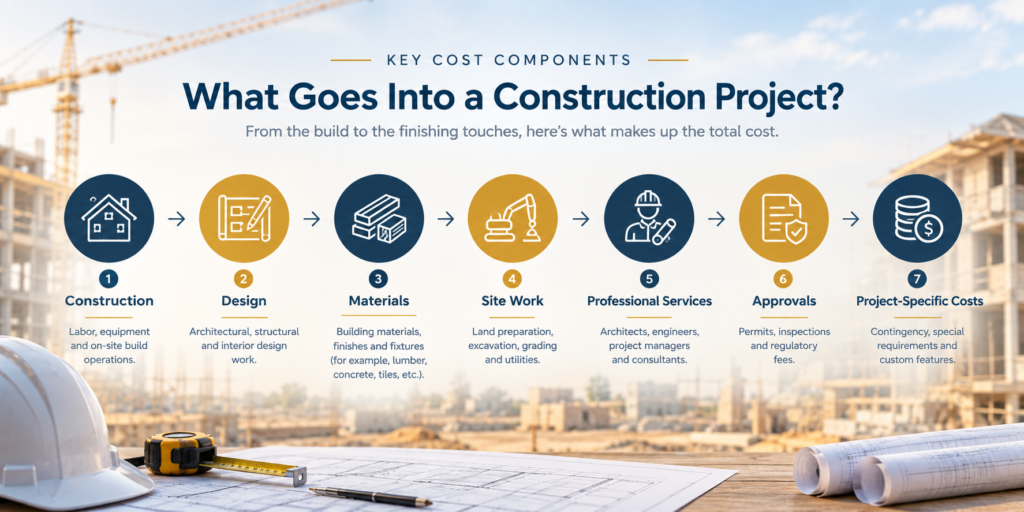
    Step 5: Develop a realistic construction budget

     Main categories to consider when planning a construction budget

    Once the scope becomes clearer, you can start developing a realistic construction budget.

    Your budget should account for more than the basic cost of construction. Depending on the project, you may also need to consider:

    • Design and architectural work
    • Engineering
    • Permits and approvals
    • Materials
    • Labor
    • Site work
    • Interior finishes
    • Equipment or fixtures
    • Project management
    • Changes that may arise during construction

    The exact budget will depend on the type, size, location, design, materials, and scope of the project.

    For residential projects, our guide on custom home construction cost explains some of the factors that can affect the budget.

    For commercial projects, see commercial construction cost to understand what can influence a commercial construction budget.

    Step 6: Plan the design before construction

    Design should happen before major construction work begins.

    Depending on the project, this can involve:

    • Architectural plans
    • Floor plans
    • Structural plans
    • Interior layouts
    • Material selections
    • Lighting plans
    • 3D visualizations
    • Engineering
    • Construction drawings

    Good planning gives you an opportunity to make important decisions before they become expensive changes during construction.

    Space planning is also important because the layout of a building can affect how people use it every day. You can learn more in our guide on how space planning can change the way your home works.

    For projects where visualising the finished space is difficult, 3D interior design before construction can help you understand the proposed space before work begins.

    Step 7: Understand permits and approvals

    Construction projects may require permits, inspections, approvals, or other documentation before certain work can begin.

    The requirements depend on factors such as:

    • Project type
    • Property location
    • Scope of work
    • Building use
    • Structural changes
    • Local regulations

    For projects in Houston, the official City of Houston permitting resources can help property owners understand local permitting requirements.

    It is important to identify these requirements early rather than discovering them after construction planning is already underway.

    Step 8: Choose the right professionals

    Once you understand the project, scope, budget, and design requirements, you can determine which professionals you need.

    Depending on the project, this could include:

    • Architect
    • Interior designer
    • Structural engineer
    • Civil engineer
    • General contractor
    • Construction project manager
    • Specialist subcontractors

    The exact team depends on the project.

    For example, a custom home may require a different combination of professionals than a commercial build-out or a home renovation.

    You should also understand what each professional is responsible for before hiring them. Our guide on what a custom home builder actually does explains the role of a builder in a residential construction project.

    If you are comparing residential builders, see questions to ask a custom home builder before hiring one.

    For commercial projects, our guide on how to choose a commercial contractor covers the questions worth considering before making a decision.

    Step 9: Confirm the scope, budget, and construction timeline

    Before construction starts, the major project details should be clearly understood.

    At this stage, you should have a clearer picture of:

    • What is being built or changed
    • What is included in the scope
    • What the budget covers
    • What the design includes
    • Who is responsible for what
    • What approvals are required
    • What the expected construction timeline looks like
    • How changes will be handled

    The more clearly these details are established before construction begins, the easier it is to manage expectations during the project.

    For custom homes, our guide on custom home building timelines explains the factors that can affect how long construction takes.

    For commercial projects, see how long a commercial build-out takes.

    Step 10: Move from planning into construction and project management

    Once the plans, scope, budget, and schedule are ready, the project moves into construction.

    This is where construction project management becomes especially important.

    Project management can involve:

    • Coordinating contractors and vendors
    • Managing the construction schedule
    • Monitoring project costs
    • Coordinating different phases of work
    • Tracking progress
    • Addressing issues
    • Managing changes
    • Maintaining communication
    • Monitoring quality and safety

    A construction project does not simply move from plans to completion on its own. The different parts of the project need to stay coordinated throughout construction.

    If you want to understand this part of the process in more detail, see construction project management: what it actually covers.

    Step 11: Complete the project and prepare for handover

    The final stage is more than simply finishing construction.

    Before the project is considered complete, the team may need to address:

    • Final inspections
    • Outstanding work
    • Corrections or adjustments
    • Final installations
    • Quality checks
    • Documentation
    • Client walkthroughs
    • Handover requirements

    The exact completion process depends on the type of project and the agreement between the parties.

    A clear handover helps make sure the finished project matches the agreed scope as closely as possible.

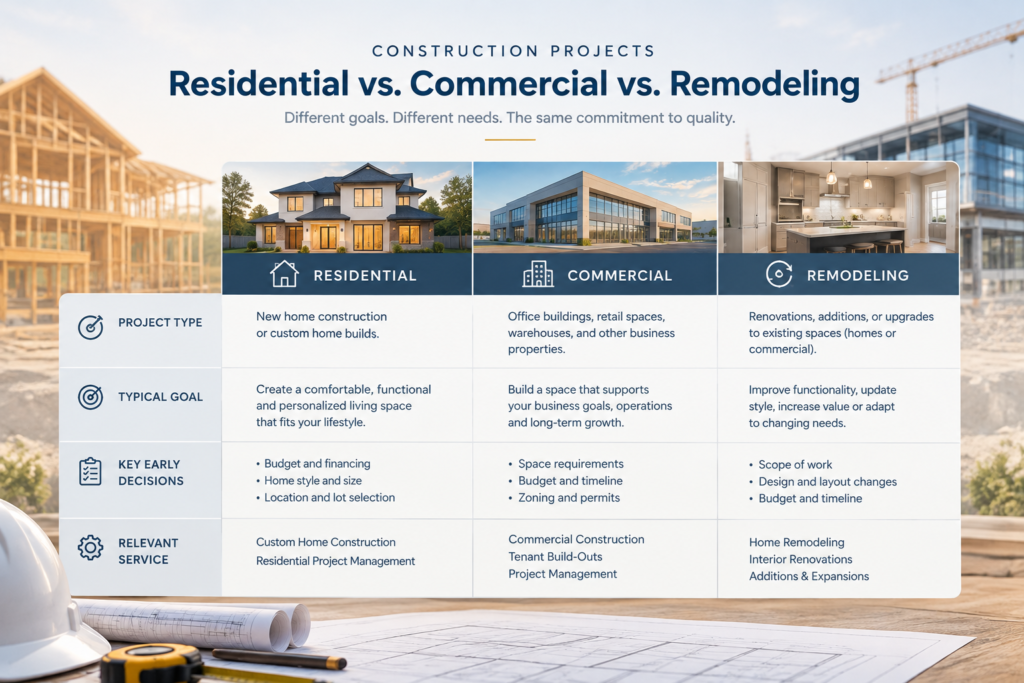
    How do you know which construction service you need?

    Comparison of residential commercial and remodeling construction projects

    If you are not sure what type of construction service fits your project, start with the outcome you want.

    If you want to…You may need…
    Build a new homeResidential construction / custom home construction
    Build on land you already ownBuild-on-your-lot construction
    Construct a commercial propertyCommercial construction
    Change an existing commercial spaceCommercial renovation or build-out
    Renovate your homeResidential remodeling or renovation
    Redesign how a space functionsInterior design / space planning
    Manage a complex construction projectConstruction project management

    The right service depends on your property’s condition, project scope, goals, and construction requirements.

    What should you prepare before contacting a builder or contractor?

    You do not need a complete set of architectural plans before your first conversation.

    However, it helps to have some basic information ready:

    ✔ Property address or general location

    ✔ Type of project

    ✔ What you want to build or change

    ✔ Approximate size of the project

    ✔ Any plans, drawings, or property documents you already have

    ✔ Desired features or finishes

    ✔ General budget range

    ✔ Preferred timeline

    ✔ Any major concerns or constraints

    The more information you can provide, the easier it is for the construction professional to understand what you are trying to accomplish.

    What commonly causes construction projects to go off track?

    Construction projects can become difficult when important decisions are unclear or change repeatedly after work has started.

    Common issues include:

    • An unclear project scope
    • An unrealistic construction budget
    • Design changes during construction
    • Poor communication
    • Delayed decisions
    • Unclear responsibilities
    • Coordination problems
    • Incomplete planning
    • Unexpected site conditions
    • Delays in materials or approvals

    Budget and timeline problems are often connected. A change to the design can affect materials, labor, scheduling, and other parts of the project.

    Our guide on why construction projects go over budget explains some of the common causes, while how to avoid construction delays focuses on the factors that can affect the schedule.

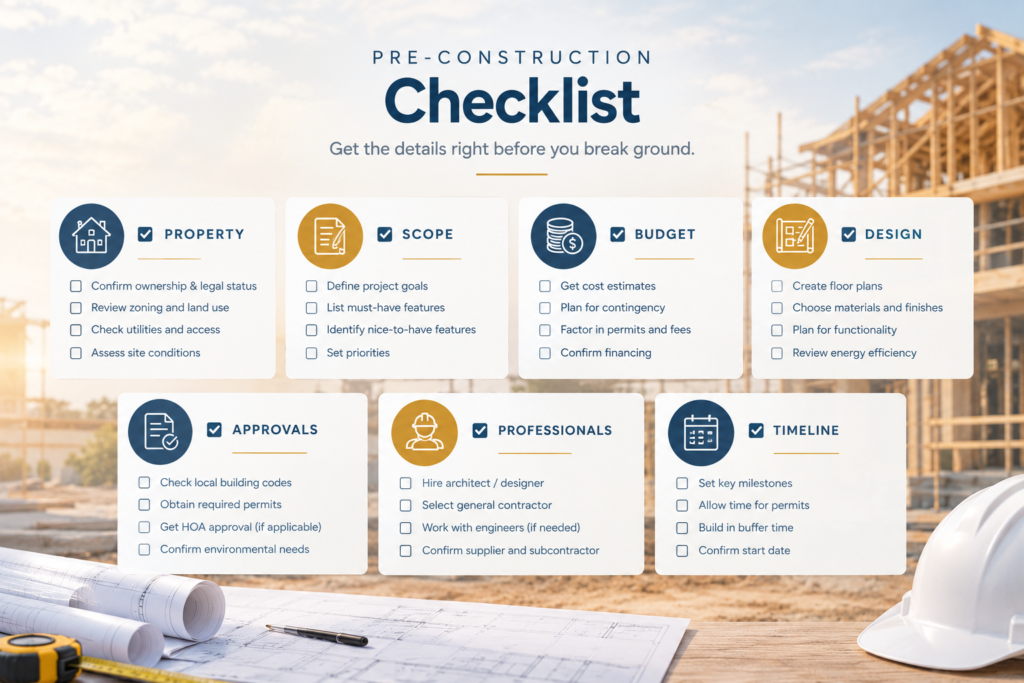
    Simple construction project planning checklist

    Before moving into construction, make sure you have considered:

    • Defined the project goal
    • Identified the type of construction project
    • Reviewed the property and site
    • Defined the project scope
    • Established a realistic budget
    • Planned the design
    • Identified permit and approval requirements
    • Determined which professionals are needed
    • Compared potential contractors or construction professionals
    • Reviewed the proposed scope and budget
    • Established an expected timeline
    • Discussed how changes will be handled
    • Confirmed how communication and project management will work

    You do not have to solve every item alone. The purpose of this checklist is to help you understand what needs to be considered before construction begins.

     Construction project planning checklist before construction begins

    Frequently Asked Questions

    How do I start a construction project?

    Start by defining what you want to build or change. Then identify the project type, review the property and site, establish the scope and budget, plan the design, understand approval requirements, and choose the professionals needed to move the project forward.

    What are the main stages of a construction project?

    The main stages typically include defining the project, site and feasibility considerations, scope and budgeting, design, approvals, professional selection, pre-construction planning, construction, project management, and completion.

    When should I hire a contractor?

    A contractor should generally be involved early enough to help you understand construction requirements, scope, costs, scheduling, and how the project can be executed. The exact timing depends on the type and complexity of the project.

    Do I need an architect for a construction project?

    It depends on the project. New construction, major structural changes, and projects requiring detailed architectural plans may require architectural services, while smaller projects may have different requirements.

    How do I create a construction budget?

    Start with the project scope and then account for construction work, design, engineering, permits, materials, labor, site work, finishes, and other project-specific costs. A construction professional can help develop a more detailed budget as the project becomes defined.

    How long does a construction project take?

    There is no single timeline for every construction project. The duration depends on the type, size, scope, design, approvals, site conditions, materials, and complexity of the work.

    What should I ask a contractor before hiring them?

    Ask about their experience with similar projects, proposed scope, timeline, budget, responsibilities, communication process, project management, and how changes will be handled.

    Ready to Start Your Construction Project?

    You do not need to have every decision made before starting the conversation.

    The first step is understanding what you want to accomplish, what type of project you have, and what needs to happen before construction can begin.

    Venus Builders works across residential construction, commercial construction, interior design, remodeling and renovation, and construction project management. If you are planning a project in Houston or elsewhere in Texas, you can contact Venus Builders to discuss your project and determine what the next steps should look like.